Iran's Armageddon
March 9, 2026

On February 28, the U.S. and Israel launched “Operation Epic Fury” against Iran and destroyed military and nuclear capabilities, killed its leader, and decapitated its government. The goals were to bring about regime change, dismantle Iran’s terrorist network in the Middle East and around the world, and end its human rights abuses against its people. But Iran launched an apocalyptic retaliation that has turned the region and oil industry into collateral damage. On March 8, its clerics elected Mojtaba Khamenei to be the Supreme Leader, one of the late Ayatollah’s sons, who was immediately rejected by President Trump and is a hardliner whom Israel will likely assassinate. Iran has attacked Arab neighbors, water supplies, oil infrastructure, and even Turkey, a NATO member. All had good relationships with Tehran, or so they thought, which is why Iran apologized on March 7, promised to stop, then reneged hours later, resuming bombing. That day, a spokesman vowed to “stab America in the heart” for bombing a girls’ school in Tehran. Of note, however, is that the school was built beside a military target, a juxtaposition which in itself constitutes a war crime.
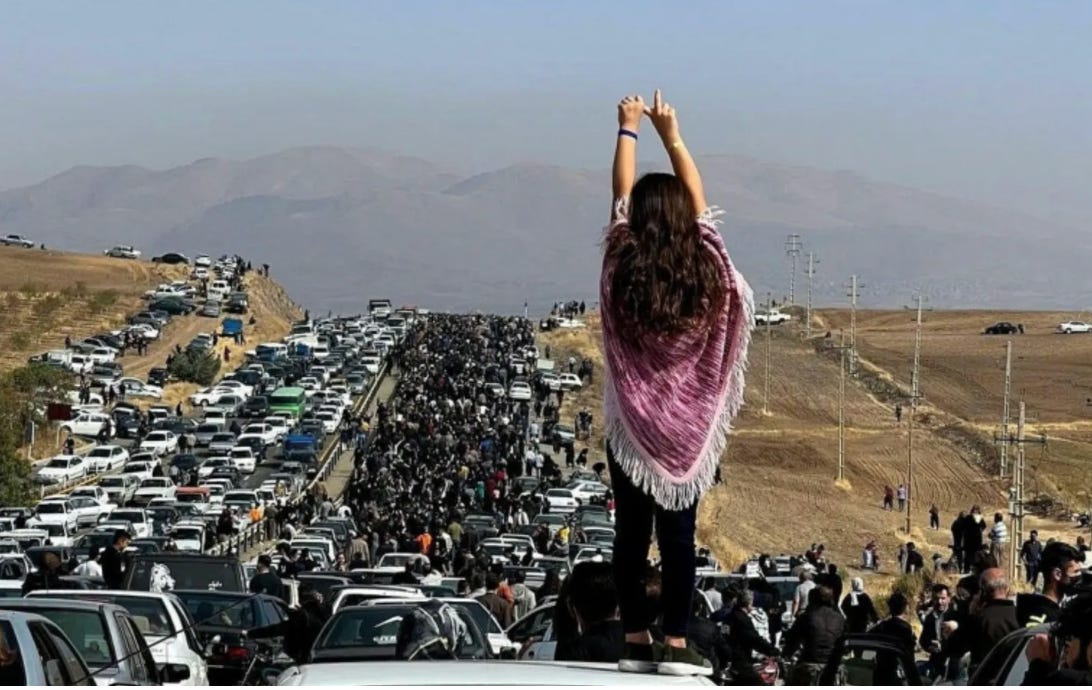
Tehran hates women, and its phony concern about females in a school cannot change the fact that its Medieval and misogynistic clergy has brutalized and shackled females. In 2022, Iran’s younger females rose against this government after a young woman was beaten to death by religious police for the “crime” of wearing her hijab improperly. They mounted one of the world’s largest female-led “revolutions” in history, but were killed, tortured, and jailed by the thousands. Resentment remains. On March 1, before this war began, Iran’s female soccer team stood in silence as their country’s national anthem was played at the Asia Cup championship in Australia. A Tehran broadcaster said that “traitors during wartime must be dealt with more severely”. Facing jail or death upon return, they remain in Australia.
Trump demands “unconditional surrender” from this regime. Still, Iran rejects this and continues to lay waste to its people, neighbors, allies, business partners, customers, and the world’s oil industry, the underpinning for the global economy. Tehran’s strategy is scorched earth, and Trump is demolishing the place and preparing his troops for a possible occupation down the road. The economic consequences are dire, and on March 7, Qatar warned that Iran “could bring down the world’s economies” by driving oil prices to $150 a barrel or more by the end of the month.
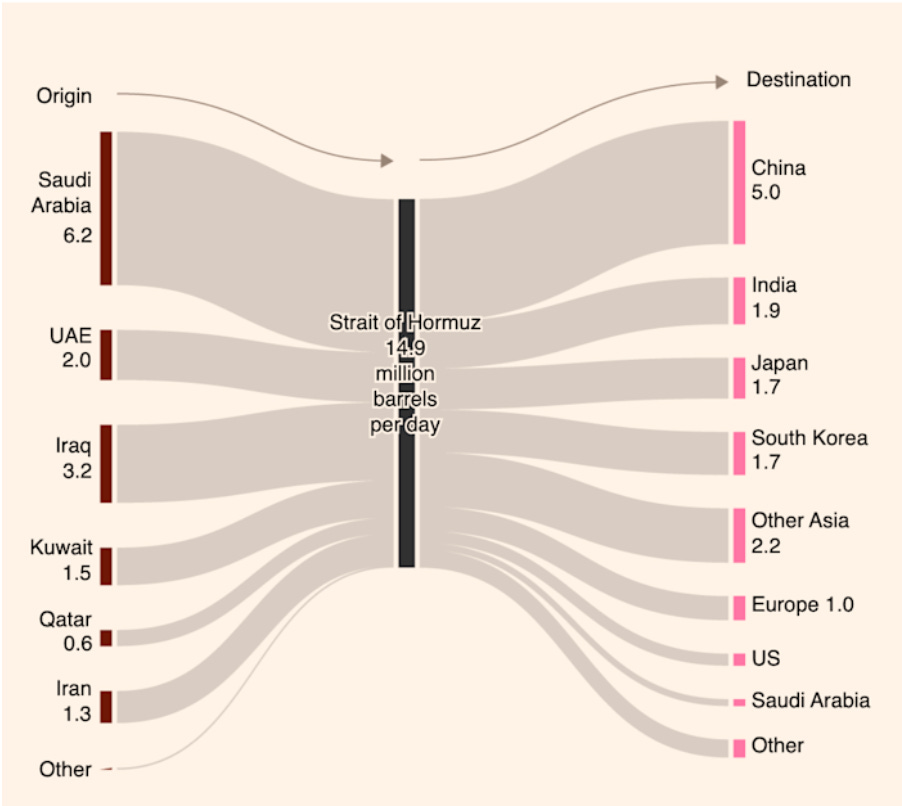
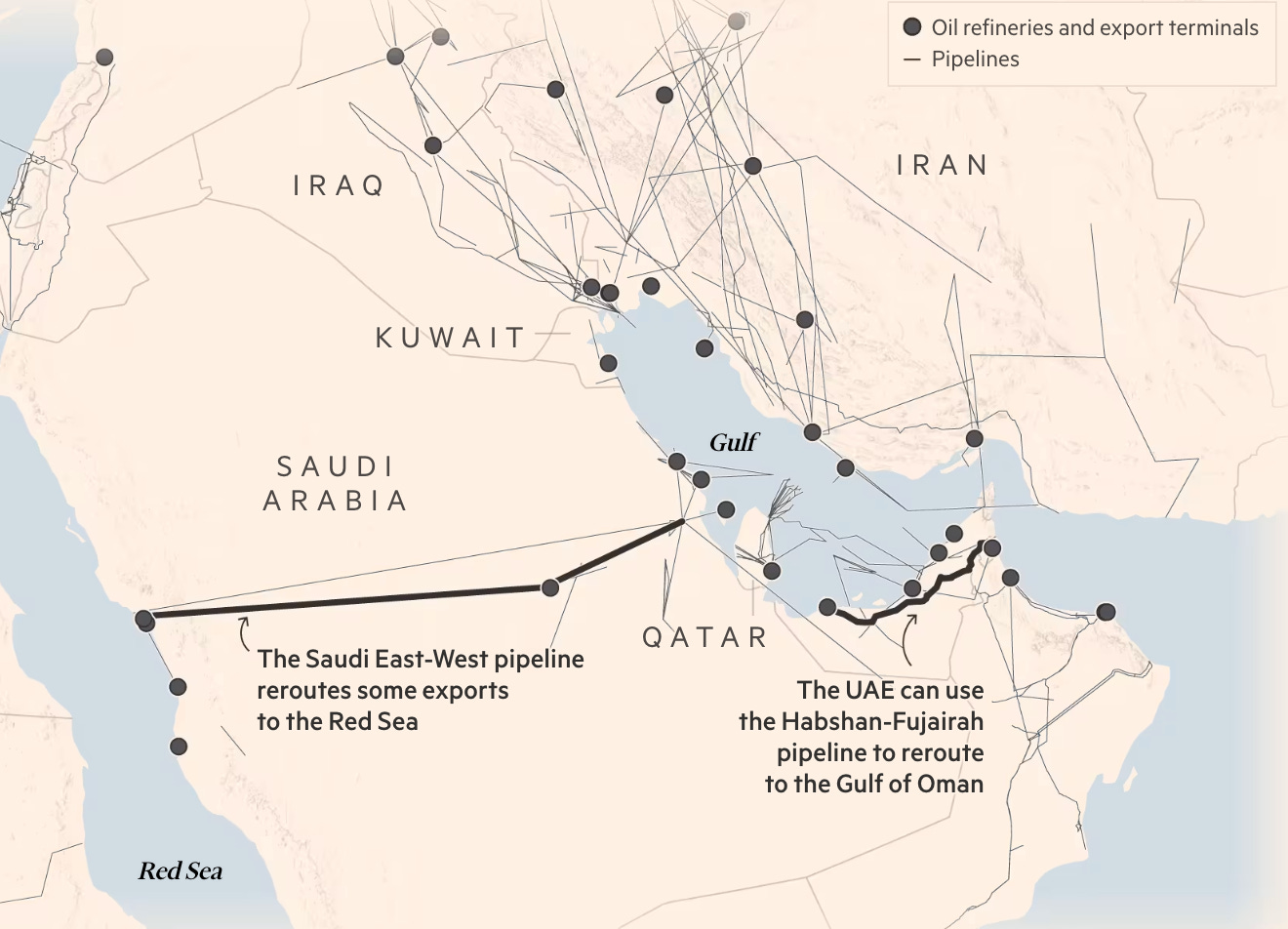
About 30% of global oil production is concentrated in this region. Saudi Arabia, Iraq, UAE, Iran, and Kuwait alone account for over 40% of global oil exports. If Iran prevents shipping through the Strait of Hormuz (in the Persian Gulf) and continues to bomb neighboring oil refineries and pipelines, the consequences are dire for importers in Europe and Asia. By contrast, the U.S. and Canada are protected because they produce more oil and LNG than anywhere else in the world.
This week, Iran’s regime escalated by bombing Bahrain’s desalination plant – a warning to the water-starved region. America responded by attacking an Iranian salination plant. But targeting water is cataclysmic, threatening millions of people, creating a humanitarian crisis, and sparking an unprecedented migration crisis to Europe. An estimated 56 unprotected desalination plants provide 90% of the region’s water to more than 300 million people.
The geopolitical fallout will be monumental globally and regionally. The Middle East’s other Islamic pillars – Turkey and the Arab Gulf states led by Saudi Arabia – will realign, unite, and join forces with the West. Iran has declared war against them all by attacking U.S. operations there as well as their energy infrastructure. This week, Iranian drones assaulted Qatari LNG facilities, which halted 20% of the world's LNG capacity even though these are partially owned by Iran itself.
Most shocking is that Iran attacked Turkey, the only Muslim country that offered condolences to Iran after Ayatollah Ali Khamenei was killed. After the bombing, Turkey’s spokesman suggested Tehran was unhinged, and accused it of pursuing a fanatical strategy of “if I am going down, I will take the region down with me.” Iran claimed the bomb that fell on Turkey had gone astray. It was shot down by NATO forces, and there were no casualties. So, Turkey did not trigger NATO’s Article 5, which would have resulted in a collective defense by all of NATO’s 32 members against Iran. While averted, such an outcome is possible if Iran attacks other NATO nations.
The only positive development is that this war damages Russia. Iran was its weapons supplier, and its military facilities, underground storage, and factories are being destroyed. Tehran and Moscow destabilized the region for years, launched terrorists, ruined Syria, attacked Israel on October 7, and have forced millions to flee to refugee camps and Europe over the years. So far, this war has resulted in a jump in oil prices, which temporarily benefits the financing of Vladimir Putin’s war in Ukraine. But this will be short-lived, as Iranian munitions are destroyed and oil revenues disappear as the oil distribution supply chain is disrupted.
China is also a victim. Beijing made enormous investments in Iran and is more energy dependent on the regime than on any other nation. Iran was the keystone of Beijing’s Middle East strategy, now in tatters, and China also backed its terrorist proxies, Hezbollah, Hamas, and the Houthis, to keep the region unstable and draw America’s attention and military assets away from Taiwan. China also loses because of its close relationships with the oil-rich Arab states in the Gulf, which Iran now bombs. Beijing needs more energy imports from Russia, but American tariffs and the war will make this difficult. Worse, the U.S. dealt an additional blow to China by exempting India, China’s arch-rival but America’s ally, from paying tariffs for buying Russian oil until New Delhi can replace Iranian oil. Advantage New Delhi: Loss Beijing.
Iran’s reprisals are suicidal, but its fanatical leaders won’t stop because they believe they are divinely chosen. Israelis support their country’s offensive with America against Tehran, as well as the renewed conflict to eliminate Iran’s Hezbollah from Lebanon. But Americans are divided amid concerns about rising fuel prices and worries that Washington will become enmeshed in another “forever” war. (Trump has said troops are being trained to occupy Iran, but only to keep the peace if it is leveled.) But, interestingly, credible polling shows that 61% of Americans agree that Iran is “a national threat” to the United States, and Congress just rejected a motion to stop the war. These realities provide political cover for Trump at home, but the fall midterms loom.
The Economist waded in: “Mr. Trump would do better to narrow his war aims. His goal should be to degrade Iran’s military capabilities and then stop. He is almost there.” Unfortunately, that is not possible, given Iran’s catastrophic attacks, which demonstrate why the regime must be completely vanquished, and the country brought to heel or partitioned. Trump insists that he must approve the next leader of Iran, and Israel pledges to murder the next candidate. The new hardline Ayatollah is doomed and should be.
This war by Israel and the U.S. is about removing crazed clerics in Iran, and illustrates why Iran can never have a nuclear bomb or even its own military in the future. Its leadership must be overthrown, the country reconstructed, its females liberated, and human rights imposed. A civilized regime must be in charge and backed up if needed for however long it takes, with boots on the ground supplied by neighbors, allies, the United Nations, and victims of its maniacal theocracy. This is not a war. It is the beginning of the Supreme Leader’s Armageddon against all infidels. It must end decisively to ensure world peace.
The mere fact that the Iranian President apologized for attacking Iran’s neighbors, then the Clerics immediately reversing that with attacks on desalination plants, threatening 100’s of millions of lives, convicts the Iranian government as a death cult. There now can be no doubt that Iran’s quest for the Bomb needed to be stopped at all costs. Diplomacy really was never an option.
Great summary. Agree. Go Israel and America doing the work that other countries will not.