The G2 World
May 11, 2026

Putin’s Waterloo looms, and on May 9, he even admitted that the “Ukraine conflict is coming to an end” — then twisted the facts by claiming Russia was the victim. That aside, the world order will be determined by the two hegemons, the United States and China, beginning with the first of four U.S.-China summits, which starts on May 14 in Beijing. The series was scheduled to begin in early April but was postponed due to the war in Iran. Now two wars rage, and the world’s giants meet to stabilize their relationship, which has been rocky due to trade conflicts, tech rivalries, Taiwan issues, and the fact that China collaborates with the world’s pariahs, Russia and Iran. Much depends on this meeting between the world’s most powerful men, and they know it. It’s a coup for President Donald Trump to be invited, and he returned the honor bestowed by President Xi Jinping by dubbing their relationship as “the G2”.
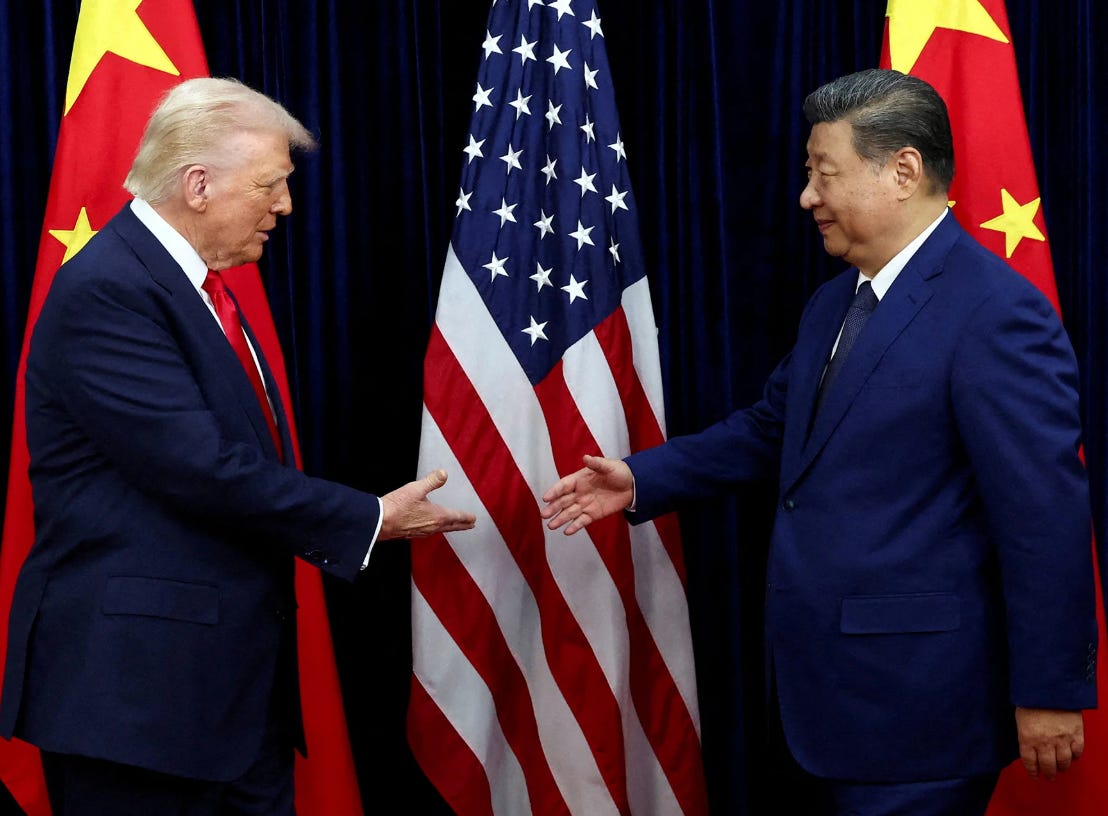
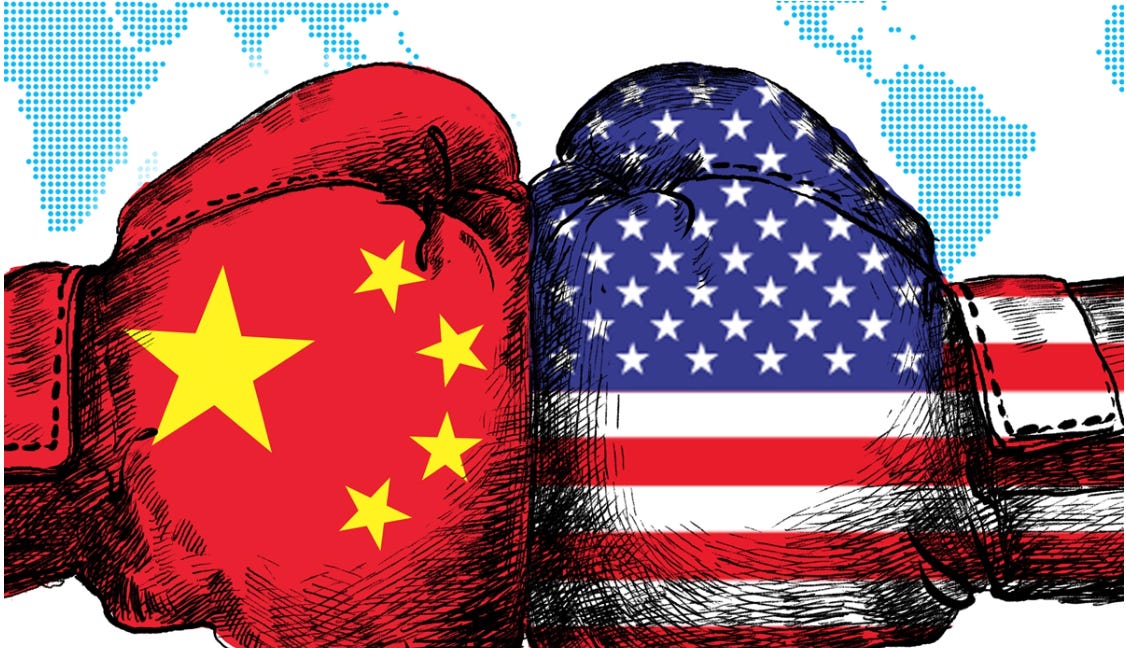
One year ago, their association was in tatters. America slapped 145% tariffs on Chinese goods, then China retaliated and imposed rare-earth export controls, threatening the global tech sector. Then, in October 2025, the two pulled back and agreed to an economic truce. Now, there is hope they will bury the hatchet completely or possibly agree to a massive bilateral investment deal. Both outcomes would be welcome but are highly unlikely given that China continues to support and profit from wars waged by Russia and Iran, conflicts that are opposed and condemned by America. That’s why Trump must use leverage such as sanctions and economic power to demand that China stop helping Putin and the Ayatollahs.
The two are not evenly matched. China has a large military, cheap labor, technology, customers around the world, and leverage thanks to its critical chokehold on the refinement of most of the world’s rare earths. By contrast, the U.S. has more wealth than any nation, has Silicon Valley, vast amounts of oil, farmland and agriculture, resources, and military superiority. But in these talks, both have leverage, and what follows is a summary of their agendas and the impact of the wars.
The War in Ukraine
China is an ally of Russia’s and profits by supplying the country with tech and equipment. It also uses its UN Security Council veto to stop any pesky controls or condemnations concerning Moscow’s genocide. Financially, it benefits as the biggest buyer of cheap Russian crude oil, smuggled via a global “phantom fleet”. China stores this cheap oil in its 1.2-billion-barrel strategic reserve, which serves as a hedge against the threat of volatile prices and disruptions in the Middle East. This energy strategy now gives Chinese manufacturers a cost advantage over European or American competitors.
China is also Moscow’s financial lifeline. Its oil purchases keep that regime afloat. But Putin is borrowing so much from Beijing that Russia will eventually become an economic colony of China. Russia repays by selling cheap oil, but it slowly goes bankrupt. When that happens, China will settle debts by gaining access and title to enormous portions of Russia’s resource-rich and Asia-based hinterland. This dependency, and its relationship to Iran, gives Beijing leverage over Moscow and Tehran and represents potential cards it can play at the summit in return for economic concessions from Washington.
Unfortunately, China benefits from these wars militarily, too. They distract the West, giving it room to maneuver and compete in Asia, Africa, and Latin America. The Ukraine war has also made Europe weaker because it lost access to cheap Russian energy and now spends billions to buy American weapons for Ukraine and to remilitarize itself. The result is that China has gained and been able to capture important export markets that Europeans once dominated.
America, on the other hand, also benefits from helping Ukraine for several reasons. Kyiv protects Europe from invasion by Russia. The U.S. profits from weapons sales to Ukraine, which are paid for by Europe, and has used the war to force Europe to pay its share of NATO costs and rebuild its armed forces. In addition, America’s support for Ukraine is supported by Americans and admired globally because Ukrainians are respected for their heroism. Finally, their defeat of Russia will help stop Moscow’s global campaign of terrorism.
The War in Iran
Xi spent a decade cultivating the Islamic Republic to gain Chinese influence in the Middle East, and its destruction will represent an immense victory for Washington, Europe, and Arab allies. Thus far, Xi’s comments on Iran have been cautious and equivocal. But President Trump recently claimed that China agreed not to send weapons to Iran and that Xi was “very happy” with America’s efforts to open the Strait of Hormuz. If accurate, that is good news, but Trump must now act to stop China from helping Iran.
China also uses both wars for propaganda purposes. Beijing’s latest talking points present the U.S. as a destabilizing military player and position itself as the world’s “stable power” that is anti-war, pro-trade, stable, and open to negotiations. This messaging is spread throughout the Global South, Africa, the Arab nations, and the BRIC countries — all are important audiences for China. Since 2013, China’s Belt and Road Initiative has “bought” allies, export opportunities, and strategic positions around the world. In 2022, China established strong relationships in the Middle East by signing enormous infrastructure projects with Iran, Saudi Arabia, the United Arab Emirates, and Israel. But to most nations, its support for Iran is unacceptable.
China’s complicity with Russia and Iran exposes it to more retaliation. On May 8, the U.S. sanctioned nine mainland Chinese and Hong Kong companies and individuals for helping Iran’s military. Sanctions have also been imposed on Chinese entities for helping Moscow. Beijing also faces a growing anti-China coalition in Asia, where nations fear it will end up being like Iran or Russia and begin blocking shipping lanes or possibly invading Taiwan.
The U.S. must use this leverage against China, wrote the New York Post: “Within months, Washington has broken the two regimes (Iran and Venezuela) that Xi used to project influence in the Middle East and Latin America…Venezuela’s dictatorship has fallen, Nicolás Maduro is in US custody, and Beijing’s position in Latin America has collapsed. What remains is a rump regime [in Iran] without the arsenal, command, or finances that lent its threats weight. President Trump should read this as the strongest card he holds against Beijing.”
By contrast, the South Morning China Post wrote: “Xi will likely try to compartmentalise Iran and keep the summit focused on trade, technology and bilateral stabilisation.”
But that won’t work. A more likely outcome is that the U.S.-China trade “ceasefire” will continue; they will dial down their tech competition; and Taiwan will remain sidelined but intact. However, China must be threatened with more sanctions to stop its support for Russia, Iran, and drug cartels in Mexico, which buy its precursors to make fentanyl. Talks will be heated, but there will be no monumental clashes. This is because both leaders are tethered, not crazed, and each faces internal opposition and pushback, as well as a possible economic slowdown. Expectations are that they will keep the global economy on track, but hopes are that they will dramatically de-escalate and end the vile wars that currently afflict the world.
In the end, it will be the Russian culture that is the undoing of that country and so too China. They are both communist playing a zero sum game. But that is not how civilization has prospered for the past 2000 years. Russia is lost but China does have a chance to throw off its Material Dialectic yoke.
PS: Dont be surprised if Hormuz stays closed for some time.
I'm not convinced that the Trump Team is capable of negotiating a favourable deal for the World. China's friendship agreement with Russia and Trump's love/admiration for Vladimir Putin are conflicting for the World Order. We can only hope the summit brings some signs of rational negotiation to benefit the general population and not Trump's pocketbook.