Tripolar Tussles
January 29, 2026

On January 27, the European Union (EU) and India announced a blockbuster trade deal, the world’s biggest free-trade agreement by population. It followed another deal that Europe signed with the four South American countries that founded the Mercosur customs union, plus another in the works with Vietnam. These deals aim to grow economies but also to reduce reliance on America and exposure to its current, erratic leader. The EU-India deal took years to finalize, but was announced days after President Donald Trump’s dust-up with Europe over Greenland and his threat of ruinous tariffs against Canada after its prime minister urged middle countries to band together against bullying. Trump may lead the world’s biggest marketplace, but he is increasingly squabbling with allies and partners as he tries to dominate trade. He’s also competing for business against two other monoliths, China and the EU. The Euro-India agreement is a rejoinder, is massive, and was dubbed “the mother of all deals” by European Commission President Ursula von der Leyen at a meeting in New Delhi. “We have created a free-trade zone of 2 billion people, with both sides set to benefit. This is only the beginning.”
Unfortunately, the EU-India deal will lead to another tiff with Trump because of the war in Ukraine. On January 28, US Treasury Secretary Scott Bessent pointed out that India (and Europe) have both flouted Western sanctions on Russia’s oil exports designed to choke off revenues for Putin’s war against Ukraine and Europe. India buys cheap Russian oil, refines it, and sells petroleum products back to Europeans who are forbidden from buying Russian oil and products. It’s a gigantic petroleum “laundry” that works against Ukraine and Europe’s best interests. Unless that oil scam stops, the US will and should issue massive tariffs against the EU as well as India. “Europe is financing the war against itself,” said Bessent.
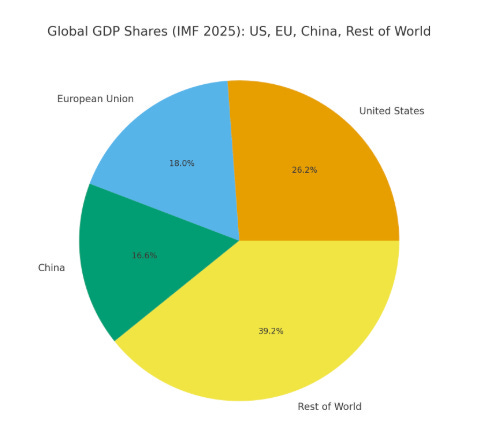
Trump politicized tariffs a year ago, and ever since, world leaders have been shuttling across the oceans to strike deals to diversify their customer base, enhance their economies, and avoid high American tariffs. But Trump's grudges against Europe will only increase as a result of this EU-India arrangement. However, the European Union’s GDP now surpasses that of China, making the trading bloc the world’s second-largest economic powerhouse after the United States. If non-EU European members are added, such as Britain, Turkey, Switzerland, Norway, and six others, the continent’s economic clout is just 3% smaller than America’s. The reality that the world economic order is now firmly “tripolar”, anchored by the US, Europe, and then China, and their growing networks. They will increasingly compete for business and dominance over one another.
Clearly, Bessent’s objections against Europe and India are valid in terms of stopping Putin, but bullying is counterproductive and pointless given the economic clout others now have. Europe and others have spread their business around the world for years, and have accelerated the process. The UK also announced a trade deal with sanctions-busting India this year, enhanced another with South Korea, and reached an ambitious trade-and-security pact with the European Union. In terms of the economic war he started, Trump shoots his own country in the foot by insulting “customers”, pushing away suppliers, opening too many “fronts”, and compounding geopolitical challenges.
Naturally, countries have always hedged their bets by doing business with many other markets, but now three gigantic global trade networks are available to choose from. The internationalization of trade began accelerating after COVID, as a matter of national security. Nations worked to replace or obtain access to essential products, ingredients, services, or resources if they came from offshore. Trade agreements proliferated from relatively open access (similar to the EU or USMCA) to limited tariff treaties or reciprocal trade treaties.
Here are the Tripolar networks thus far:
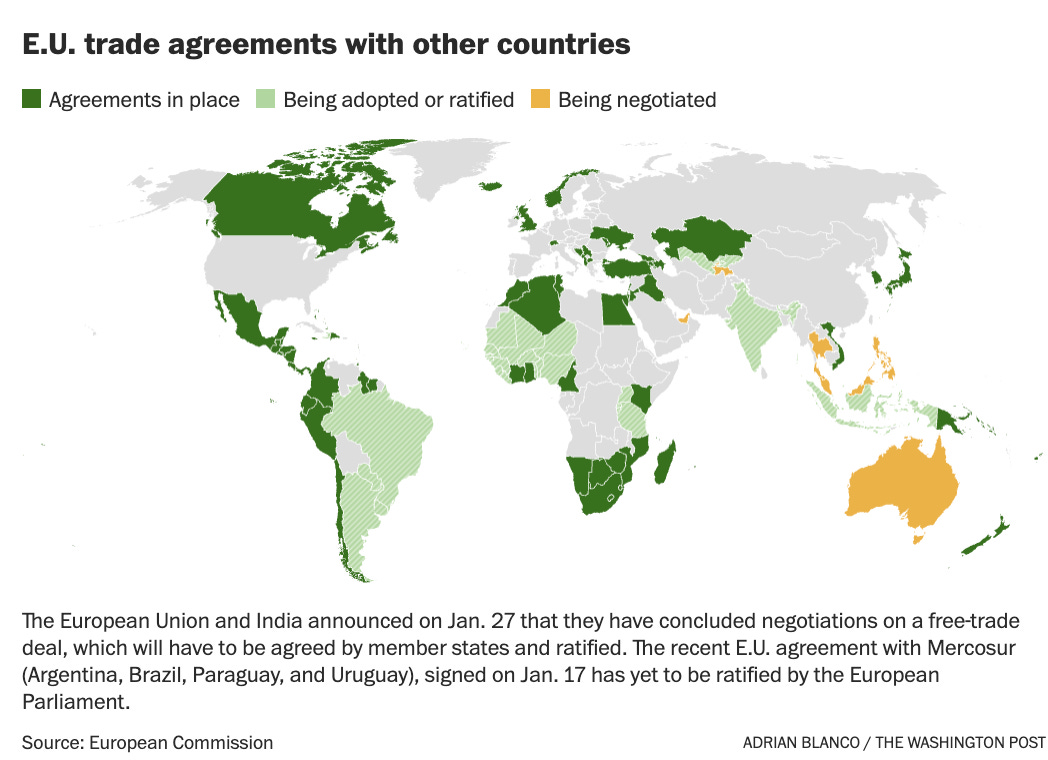
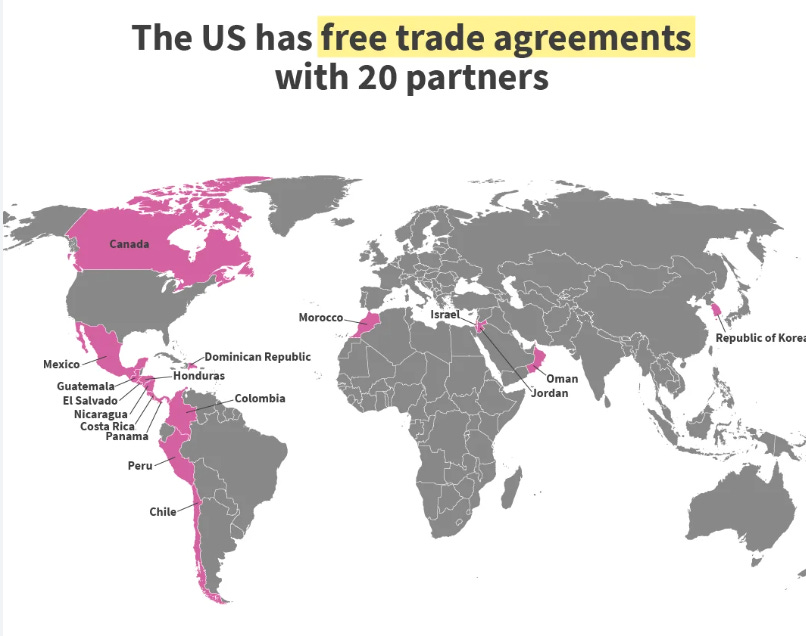
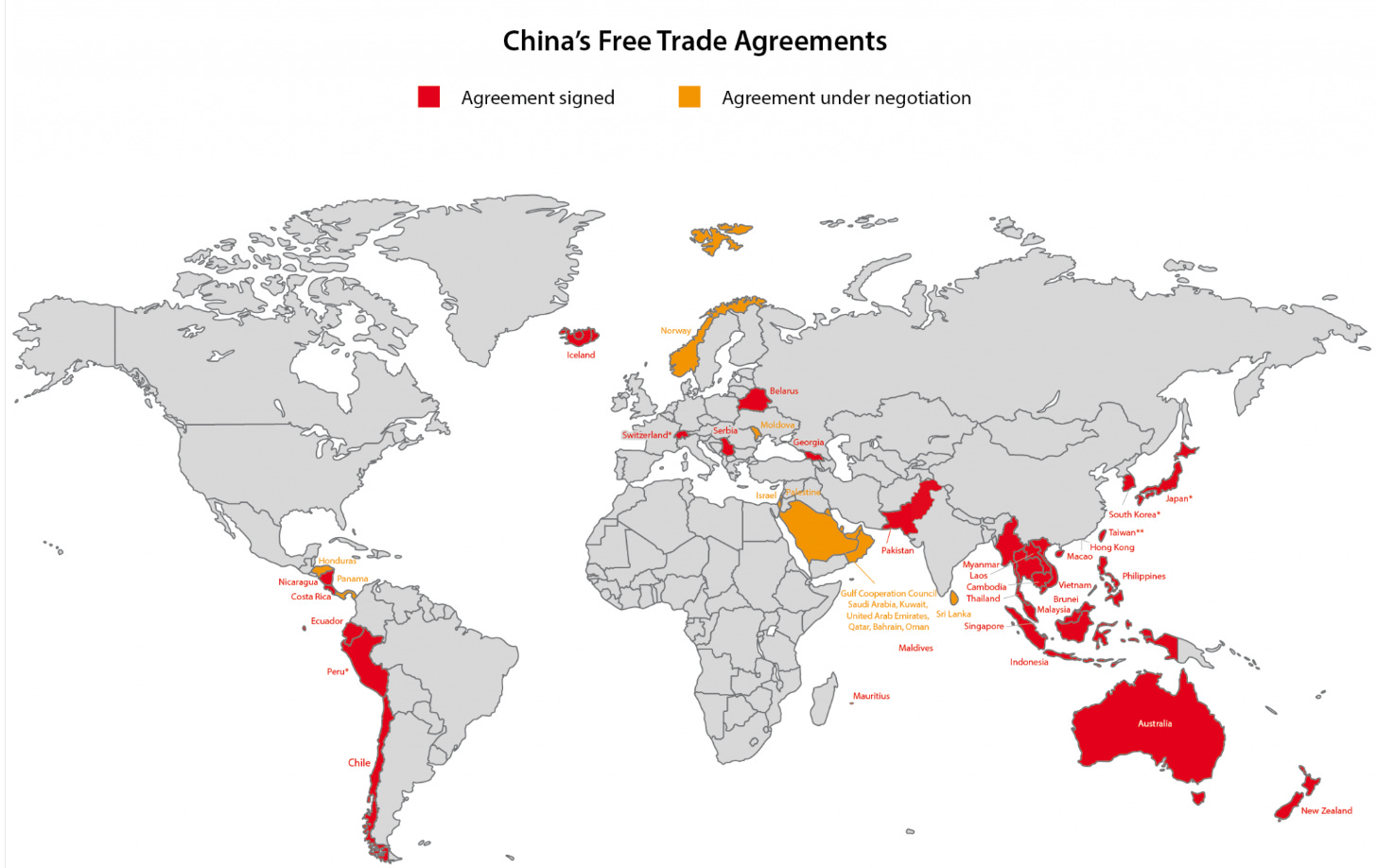
Despite the urgency to do deals, there can be no speed dating. A deal between Canada and the EU was negotiated ten years ago, and remains unratified due to objections raised about agriculture by France and Italy. The EU and India deal is so comprehensive that it took nine years to complete. Now finalized, approval by their respective governments will require another year or more. In their deal, tariffs will be eliminated or reduced on most goods traded between the two, saving consumers billions. The agreement is important for both sides, especially India, which the US hit with 50% tariffs in 2025, among the highest levels applied to US trading partners. And Trump has also threatened severe tariffs against Europeans, too, which may or may not actually happen.
And super-sanctions on Russian oil, pending in the US Congress, may upend the whole arrangement. But as it is, the India-EU deal is the world’s largest, encompassing a quarter of the global economy. India, which is forecast to become the world’s fourth-largest economy this year, is already one of the EU’s largest trading partners for goods. And the EU is now one of India’s largest trading partners, rivalling the US and China.
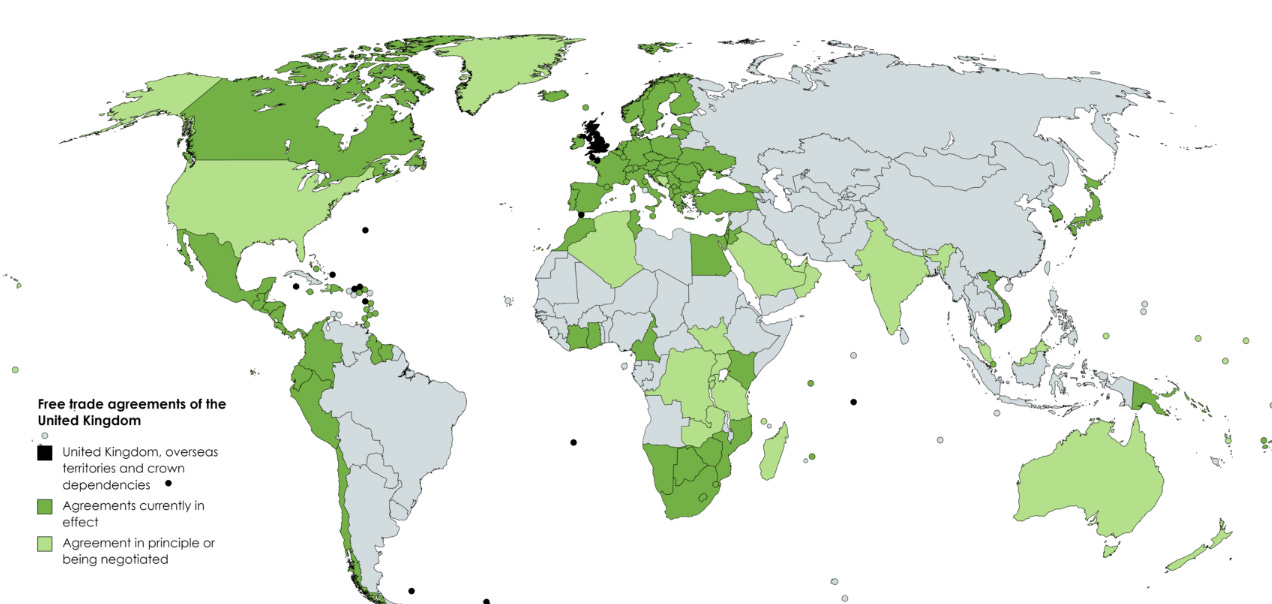
Britain, which has left the EU, has branded itself as “Global Britain” and signed and negotiated various types of trade agreements around the world with former colonies and other countries. On January 28, Trump’s closest European leader, British Prime Minister Keir Starmer, trekked to China for the first time to hold trade talks and encourage British companies to do business there. Talks are delicate and aimed at “seeking a way around the volatile US”, wrote The New York Times.
America’s biggest trading partners have been high on Trump’s tariff hit list: China, Mexico, Canada, and Europe as a whole. The USMCA is a comprehensive free trade agreement that is to be renegotiated next year and restricts trade from outside nations into the North American bloc area. After spats in recent months with Canada and Mexico over Chinese attempts to gain backdoor entry into the North American market, the US threatens to negotiate with Canada and Mexico separately and will undoubtedly toughen its terms. Approval of the US deal with the EU has been suspended by Europeans in protest against Trump’s Greenland demands.
Thus far, China is winning the trade sweepstakes. “In 2025, it became the first nation ever to post a US$1 trillion annual trade surplus – an extraordinary feat given the intensifying trade war with the US and growing resistance from the European Union,” according to the South Morning China Post. “Beijing achieved this by aggressively expanding into non-US markets, especially Belt and Road Initiative countries.” Beijing has continuously extended its global reach even though, since 2018, a US trade war has been underway, involving tariffs but also restrictions on technology, intellectual property rights, and critical minerals. A tariff truce with Washington was reached in November 2025, but conflicts continue.
Some predict that this three-cornered “patchwork quilt” trading system will expand and deepen. Trump essentially promotes a modern-day version of “mercantilism”: A state dedicated to maximizing exports, minimizing imports, tapping “colonies” for raw materials and cheap goods in order to build national wealth at the expense of rivals. The difficulty is that he’s got two gigantic rivals these days, along with a coterie of other countries that also intend to pull off the same strategy.
If Trump were smart, he would ok the use of weapons to make longer range strikes from Ukraine into Russia to hasten a peace agreement between the two. Also he should repair US relationships with our old allies, Europe, Japan, South Korea, Canada. In the past the USA was able to vaunt its alliances as making it stronger. At this point he and the MAGA Republicans are in the process of destroying those alliances, weakening the USA, and making China stronger.
Bessant’s complaint might be “valid in terms of stopping Putin” but it would be more credible if his glorious leader didn’t spend half his time on his knees in front of Putin.